


Japanese Curry
- Author
- Christian Leue
- Servings
- 4
- Category
- Dinner
Ingredients
- 1 tsp neutral oil for frying
- 1 pound thinly sliced beef (chuck or ribeye), chicken (thigh or breast meat), or pork (shoulder or belly)
- 1 pound onion, peeled and cut into thin slices
- 1 pound carrot, scrubbed, peeled and cut into bite sized pieces
- 1 pound potato (yukon gold or russet), scrubbed, peeled and cut into bite sized pieces
- 1 dashi stock packet – This is also what you want to use when making miso soup, and is a great addition to many western soups as well. Be aware that many commercial dashi powders and stocks are made from yeast extract and/or MSG, and will be less complex in flavor (think vanilla extract vs. imitation vanilla).
- Water, (sufficient to cover the meat and vegetables)
- 1/2 stick butter (my preference) or two ounces neutral oil (for a dairy free option)
- 1/2 cup all purpose flour
- 2 Tbsp Massalis, finely ground
- 1 Tbsp Worcestershire sauce
- 1 Tbsp mirin
- 1 Tbsp soy sauce (for the best flavor look for ones that contain only soybeans, wheat, and salt, and keep the bottle in the fridge once opened)
- Cooked Japanese rice
- Pickles (rakkyo and fukujinzuke) for serving (optional but great)
Directions
- Mottainai tip – Optionally, you can make a quick stock from the skins of all of your vegetables and any meat scraps, adding water to cover. If you go this route add the dashi stock bag to this pot. Strain the solids after about 30 minutes of simmering and reserve the liquid, you’ll probably have about 4 cups total.
- In a skillet over medium heat add the oil then fry the meat in batches until lightly browned, making sure not to crowd the pan and removing the cooked meat to a 4 quart saucepot. Fry the onions in the skillet until softened and lightly browned, then deglaze with 1/2 cup water and transfer everything to the saucepot along with the carrot, potato, and the stock if you made it (or the stock bag if you didn’t), then add water until the solids are barely covered. Bring to just below a boil, then drop to a simmer.
- For the roux: In the skillet you used to cook the onions add the butter (or oil) and flour, and cook while stirring over low heat for 12-15 minutes, or until light blonde in color. Add the spices and cook for a minute more, then add the Worcestershire, mirin, and soy sauce, mix well, and remove from heat. If you made a larger batch, remove the extra roux to storage containers now.
- Once the vegetables are tender (about 30 minutes), remove and discard the dashi stock bag (if you didn’t make the stock mentioned above), and remove about a cup of the broth to your skillet and stir well to dissolve the roux, then transfer everything back to the pot. This method eliminates the possibility of undissolved blobs of roux in your curry.
- Allow the curry to cook for about 5 minutes more, stirring gently. The roux will thicken the broth as it heats. Adjust to taste with additional worcestershire, mirin, and soy sauce, if desired.
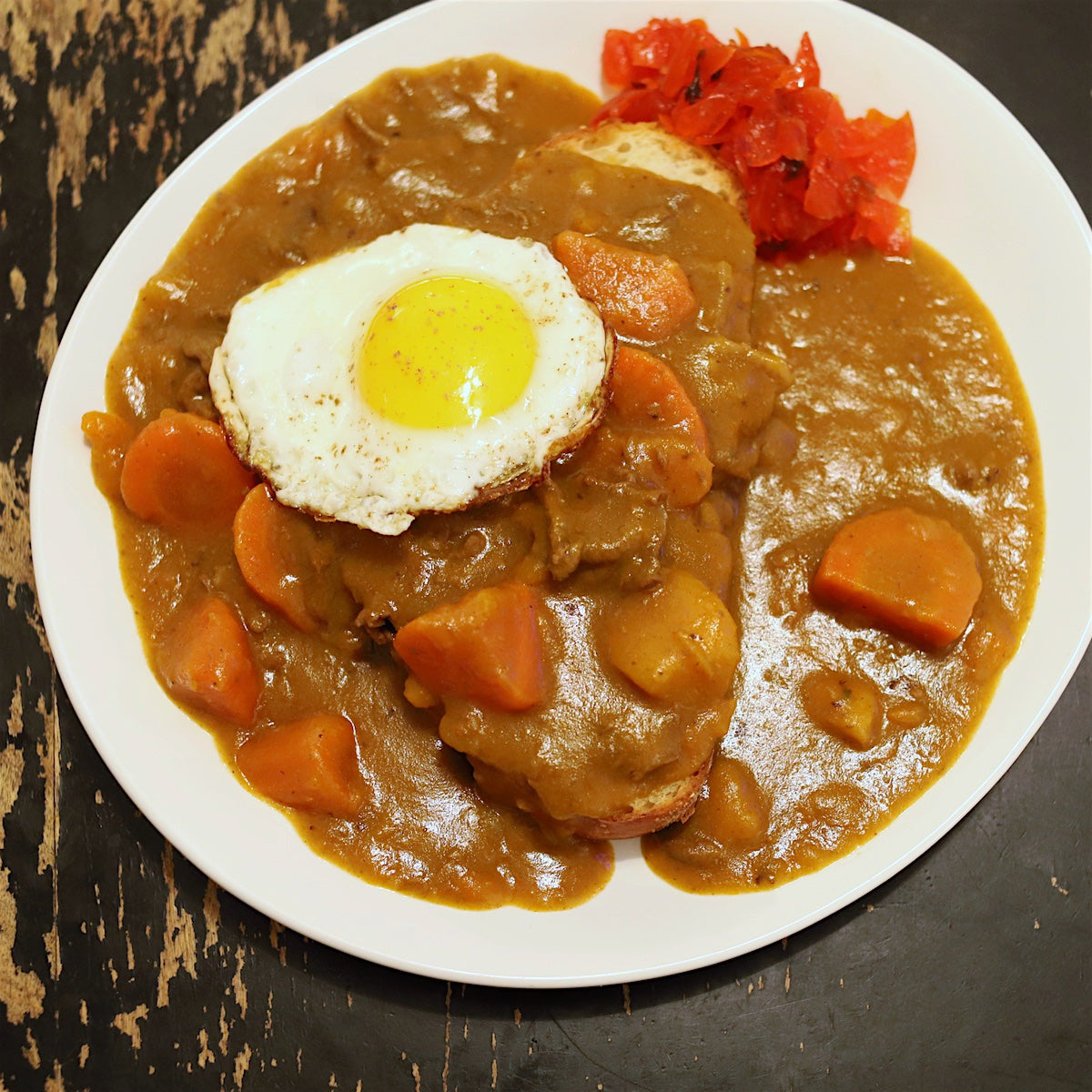
- Serve with Japanese rice (a traditional serving), or over a thick piece of buttered toast, topped with a soft fried egg (our house favorite, pictured), or over a roasted quarter of a cauliflower (for a lighter option).
- If you like more heat, a sprinkle of Aleppo or Espelette is very nice.
- Serve with pickles to add a bright element. The pickles I mentioned in the ingredients list are traditional Japanese pickles, and are lightly sweet to complement the mild heat of the curry. I’ve found that bread and butter pickle chips, rinsed of excess vinegar then tossed with a bit of soy sauce, work well also.